A non-profit organization called Makers4Good contacted me and asked me to review their new product, Backbeater launched with a Kickstarter campaign on August 14. As described by Makers4Good:
“Backbeater is the world’s most advanced metronome for drummers. With the Backbeater Sensor, it knows the tempo you’re playing. Backbeater allows drummers to monitor their tempo: either freestyle or with a reference tempo. The Backbeater metronome can be set to your rhythm. It can discreetly tell you a tempo you tap out, and it can store lists of tempos, for when you’re playing live.”
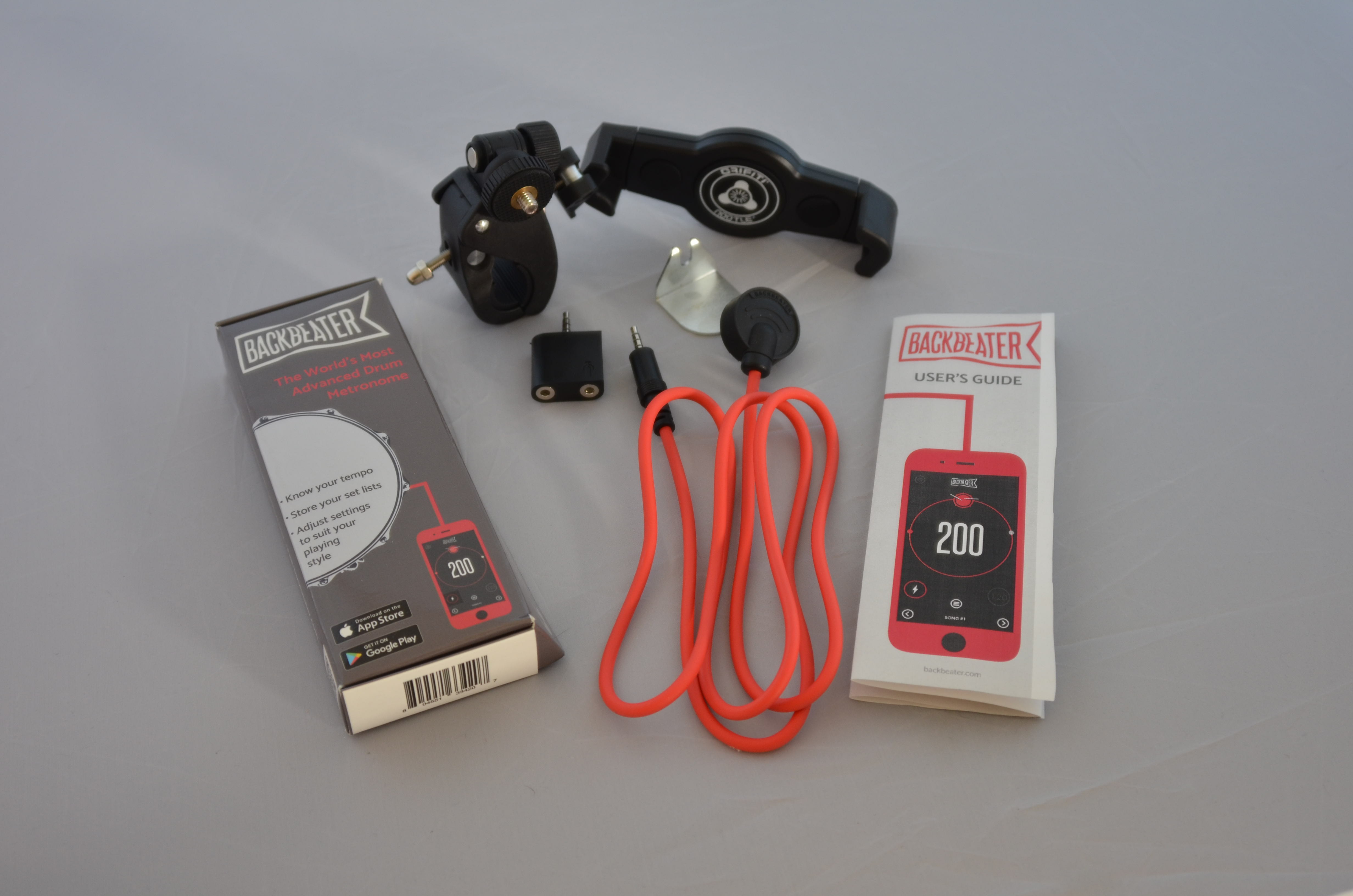
The package includes a snare drum-mounted sensor (the sensor plugs into your smartphone/tablet and it attaches to your snare drum under a lug), a headphone splitter, and a mounting bracket (not included in the version tested). Linked with the Backbeater app available for iPhone/Android, this product is an accuracy metronome with interesting functions. The classic metronome function works in a range between 20-220 bpm, you can save tempos for specific songs. You can also choose the sound of the metronome that you prefer.
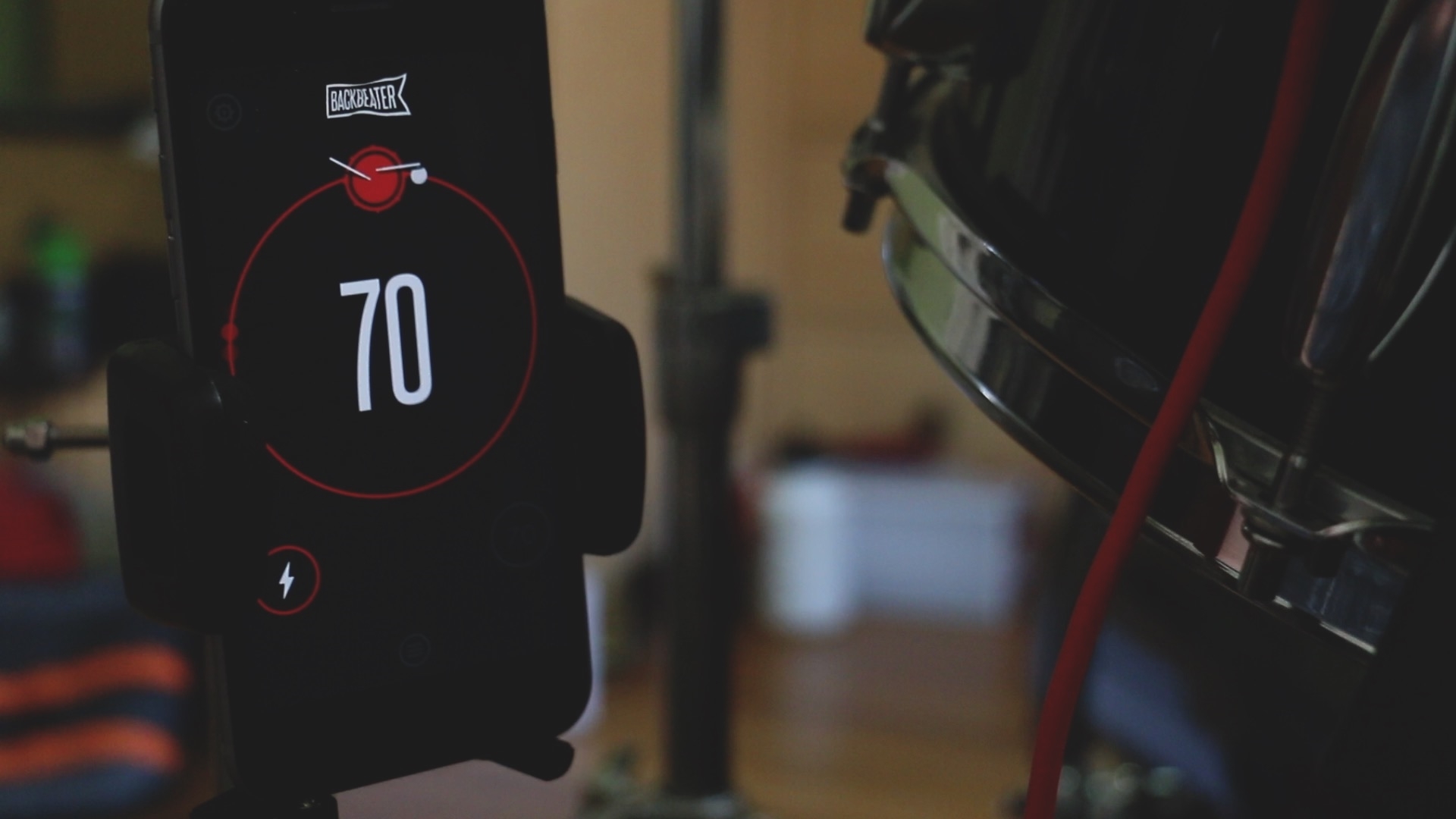
A red dot spins counterclockwise crossing a drum icon at the noon position on every beat. With this interesting function, you can focus not only on the number of the bpm but especially on the (circularity) red dot, improving your sense of time and accuracy; certainly a useful tool. More functions would be more useful to me: the possibility to change the subdivisions, to program rhythm, and to silence the measure.
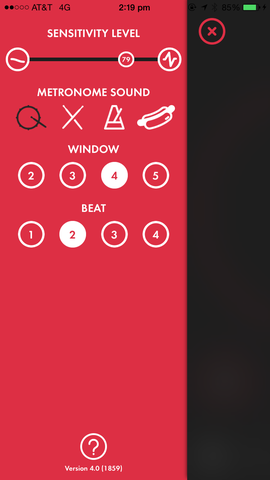
When you turn off the metronome the app detects your tempo, calculated from the spacing of your snare drum hits. You can change the sensitivity of the device settings with two parameters:
• Window calculates how many snare drum hits the app uses to calculate your tempo, with a number from 2 to 5.
• Beat corrects the rate of drum hits with a scale from 1 to 4.
I tried this function in different contexts, is an excellent tool to develop your groove but when you play a fill or add some ghost notes the device goes weird showing the word “MAX” for a moment, returning to the original tempo after a few measures. The same thing happens when you displace the backbeat; this could be a problem. I hope Makers4Good corrects this lack because this is a useful tool for developing your timing.
The product is promising, especially when the app detects your tempo/groove, and is highly suggested for teachers. If you are interested I suggest donating to their Kickstarter campaign.
 Francis' Drumming Blog